MLK in India: His Address on All India Radio

Martin Luther King, Jr. visited India in 1959, an event which is described in detail at the King Encyclopedia. King, as is well known, modeled his approach to civil rights in the United States on Gandhi's successful mass non-violence/civil disobedience campaign for Indian independence.

On NPR last week, there was a story about how All India Radio has recently discovered in its archives the recorded version of the address given by Dr. King at the end of his visit to India.

Through a little bit of digging on Google, I found the actual recording posted on the internet, at the website of the Indian Consulate of Chicago.

For me the highlight of the address is the closing, which I'll take the liberty of including here:

Many years ago, when Abraham Lincoln was shot – and incidentally, he was shot for the same reason that Mahatma Gandhi was shot for; namely, for committing the crime of wanting to heal the wounds of a divided nation. And when he was shot, Secretary Stanton stood by the dead body of the great leader and said these words: “now, he belongs to the ages.” And in a real sense, we can say the same thing about Mahatma Gandhi, and even in stronger terms: “now, he belongs to the ages.”

And if this age is to survive, it must follow the way of love and non-violence that he so nobly illustrated in his life. Mahatma Gandhi may well be God’s appeal to this generation, a generation drifting again to its doom. And this eternal appeal is in the form of a warning: they that live by the sword shall perish by the sword.

We must come to see in the world today that what he taught, and his method throughout, reveals to us that there is an alternative to violence, and that if we fail to follow this we will perish in our individual and in our collective lives. For in a day when Sputniks and explorers dash through outer space and guided ballistic missiles are carving highways of death through the stratosphere, no nation can win a war.

Today we no longer have a choice between violence and non-violence; it is either non-violence, or non-existence. (link)

Perhaps the meanings of King and Gandhi's respective messages have changed as times have changed. India is no longer a country with a colonial chip on its shoulder, and minorities in the U.S. have a shining example of success in President Barack Obama (among many other signs of progress). It is probably a bit too easy and nostalgic to simply savor those past struggles without continually seeking to apply them to our messy current situations; with too much familiarity and Big Talk, these two icons of struggle risk becoming bloated relics. (For example, by the 1970s, Gandhianism in India had become an easy symbol, devoid of substance -- one thinks of the overweight Congress politicians in homespun, happily siphoning off crores of Rupees for Swiss bank accounts.)

Concomitantly, it may be that rigorous non-violence cannot mean the same thing for us today as it did for African Americans who demanded a seat at the American table, or Indians who demanded sovereignty -- a seat at the table of nations. Perhaps King and Gandhi's shared dream of a total, worldwide movement away from a social order based on violence, active or potential, is one we'll have to put away for the foreseeable future, as simply not in keeping with human nature. Satyagraha is a brilliant strategy for mobilizing the Indian masses to defeat the most powerful, thoroughly armed Empire the world has ever known, without bloodshed. But in my view it is neither effective nor appropriate as a response to Jihadists on the streets of Mumbai, or Maoist rebels in eastern India, to name just two examples. (I am not a pacifist myself for this reason.)

And yet, is it not still chastening to hear these words, even in these times? (Listen to the speech.) As I say, some of the diacritics may have changed, but I think King's warning still stands: "they that live by the sword shall perish by the sword." Gaza*. Sri Lanka. Iraq. India-Pakistan. Isn't that still the truth we need to hear?

[* Update: Just to be clear, I'm using the name "Gaza" here as a short-hand for the current Israel-Palestinian conflict, not as a way of suggesting that the Palestinians need to hear this message more than the Israelis. Both sides might benefit from hearing this message.]

"Imagining South Asia" Special Issue Now Available

A long time ago, Prof. Kavita Daiya and I started working on a special issue of the journal South Asian Review, with the topic "Imagining South Asia." After several delays, the issue is finally out. Hopefully the cover should give you some idea of what we were after in the issue:


The source of the image is here.

Here is the table of contents:

Fakrul Alam: "Imagining South Asian Writing in English From Bangladesh"

Savitri Ashok, "Battering Ram, Bruised Nation: Postcolonial Nationalism and the Forsaken Promise of Secularism"

Rajini Srikanth, "South Asia and the Challenge of Intimacy in the Global War on Terror"

Alexandra Schultheis, "Reading tibet: Area Studies, Postcoloniality, and the Politics of Human rights"

Bidhan Roy, "From Brick Lane to Bradford: Contemporary Literature and the Production of Asian Identity in Britain"

Lavina Shankar and Rajini Srikanth, "From Multan to Maine: A Conversation with Ved Mehta"

Henry Schwarz, "Resolution, Revolution, Reaction: Reimagining Conflict Transformation Through Art"

Makarand Paranjape, "Imagining India: Aurobindo, Ambedkar, and After"

Kailash Baral, "Identity and Cultural Aporia: Globalization and the Tribes of Northeast India"

Amardeep Singh, "Names Can Wait: Misnaming the South Asian Diaspora in Theory and Practice"

I am putting my own essay online as a PDF if anyone is interested, here. (Needless to say, I would love to hear feedback on the essay if anyone has the time to read it.)

Also, if any of the contributors would like their essays also available online, please let me know.

You can order just the special issue by sending $15 (payable to South Asian Review) to the office of the editor, Professor Kamal Verma, at the University of Pittsburgh. The address to send it to is at this page. For just a few dollars more, you can get an annual individual subscription.

And Then They Came For Lasantha Wickramatunge

Sri Lankan journalist Lasantha Wickramatunge was assassinated in broad daylight outside of Colombo last week. SAJA has a helpful round-up of coverage of the event, including some background on Wickramatunge's journalistic record. What stands out is the fact that he has been a consistent dissenting voice in Sri Lankan politics, sharply criticizing the previous government for years. In recent years he had also become a critic of the new government of Mahinda Rajapaksa, whom he had earlier supported. Indeed, Wickramatunge and Rajapaska were until recently rather close friends.

Wickramatunge's assassination is widely believed to have been carried out by forces allied with the government, if not directly sponsored by the government itself. His memorial service, which took place yesterday in Colombo, was attended by thousands of people (see a Flickr photostream of the event here).

This past Sunday, the Sunday Leader, the Sri Lankan newspaper founded by Wickramatunge and his brother, carried a posthumous editorial authored by Wickramatunge himself. It's called, "And Then They Came For Me," and it's written with the understanding that it would only be printed in the event of the author's assassination.

It's a moving statement, which ought to be read by anyone who doubts whether freedom of the press or freedom of speech is, after all, an essential right. Wickramatunge begins by asserting his primary goal as a journalist over the fifteen years he had worked with this newspaper:

The Sunday Leader has been a controversial newspaper because we say it like we see it: whether it be a spade, a thief or a murderer, we call it by that name. We do not hide behind euphemism. The investigative articles we print are supported by documentary evidence thanks to the public-spiritedness of citizens who at great risk to themselves pass on this material to us. We have exposed scandal after scandal, and never once in these 15 years has anyone proved us wrong or successfully prosecuted us.

The free media serve as a mirror in which the public can see itself sans mascara and styling gel. From us you learn the state of your nation, and especially its management by the people you elected to give your children a better future. Sometimes the image you see in that mirror is not a pleasant one. But while you may grumble in the privacy of your armchair, the journalists who hold the mirror up to you do so publicly and at great risk to themselves. That is our calling, and we do not shirk it.

Every newspaper has its angle, and we do not hide the fact that we have ours. Our commitment is to see Sri Lanka as a transparent, secular, liberal democracy. Think about those words, for they each has profound meaning. Transparent because government must be openly accountable to the people and never abuse their trust. Secular because in a multi-ethnic and multi-cultural society such as ours, secularism offers the only common ground by which we might all be united. Liberal because we recognise that all human beings are created different, and we need to accept others for what they are and not what we would like them to be. And democratic... well, if you need me to explain why that is important, you'd best stop buying this paper. (a link)

Though Wickramatunge had been a critic of the government's prosecution of the ongoing war against the LTTE in northern Sri Lanka, he was by no means an apologist for the LTTE (indeed, if I am reading his name correctly, he is ethnically Sinhalese, not Tamil).

Neither should our distaste for the war be interpreted to mean that we support the Tigers. The LTTE are among the most ruthless and bloodthirsty organisations ever to have infested the planet. There is no gainsaying that it must be eradicated. But to do so by violating the rights of Tamil citizens, bombing and shooting them mercilessly, is not only wrong but shames the Sinhalese, whose claim to be custodians of the dhamma is forever called into question by this savagery, much of which is unknown to the public because of censorship.

What is more, a military occupation of the country's north and east will require the Tamil people of those regions to live eternally as second-class citizens, deprived of all self respect. Do not imagine that you can placate them by showering "development" and "reconstruction" on them in the post-war era. The wounds of war will scar them forever, and you will also have an even more bitter and hateful Diaspora to contend with. A problem amenable to a political solution will thus become a festering wound that will yield strife for all eternity. If I seem angry and frustrated, it is only because most of my countrymen - and all of the government - cannot see this writing so plainly on the wall. (link)

There's more that I could quote, but perhaps I should just encourage readers to read the editorial themselves.

It's a remarkable statement in many ways, not least because its author seemingly knew what was coming, but continued doing what he was doing all the same. (Bravely or foolishly.) But even more than that, despite the extremity of the situation in which Wickramatunge wrote this editorial, his voice remains calm and reasonable. There is no melodrama there, just a passionate commitment to the journalistic mission of always aspiring to speak the truth, even if no one wants to hear it.

I do not know whether Wickramatunge was right or not when he argued, in the passage I quoted above, that the current military actions in northern Sri Lanka are doomed to failure. Indeed, part of me hopes he is wrong, and that this really is the end of the road for Prabakaran and the LTTE army.

But history and logic suggests that in fact Wickramatunge is likely to be exactly right: you cannot win over the hearts of minds of an enemy in a civil conflict by brutalizing them. Any lasting peace will have to be consensual and negotiated, involving the disarming of the LTTE, but also concessions from the government. (Northern Ireland is the model to try and emulate, I think.)

Dabbling in Regional Indian Cinema on an Air India Flight

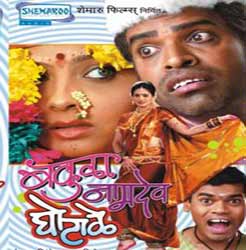
BakulaNamdevGhotale_acass_246x250.jpg People talk trash about Air India, but it has one distinct advantage -- if you're lucky enough to fly to and from India on one of their newer 747s, which are equipped with personal video screens, you have a wealth of Indian TV, movies, and music to entertain yourself with, while eating Chiwda (instead of peanuts) and not-too-bad shrimp curry. (You still have to sit in a cramped little chair for 16-24 hours without losing your mind, but that would be the case on Lufthansa too.)

Our son wasn't too much trouble on this flight (he slept through much of it), so I was able to sample a range of subtitled Indian movies in different languages that I otherwise might not see. In some cases, I didn't watch whole films -- sometimes just an hour or so -- but it was an interesting experiment to compare a group of films that normally are only seen by members of specific linguistic communities. People sometimes talk about Indian cinema as if the only films worth watching are made in Hindi and produced in Mumbai, but perhaps the folks who are saying that only watch those films?

The most entertaining, and highest production value film I watched was the Tamil film, Sivaji, The Boss, starring Rajnikanth (star of several YouTube "superhits," including "Little Superman"). I initially enjoyed the sense of Tamil ethno-linguistic pride in the film (Rajnikant's love interest is named "Tamizhselvi"), though it did start to get old after a little while (I did not see such an obsession with regional identity in the Malayalam, Marathi, Gujarati, Bengali, or Punjabi films I sampled on this flight. Is the Tamil-centricness of Sivaji, The Boss unique to this film?).

Rajnikanth's manic physical comedy and dancing, and the film's over-the-top sets and situations, are really why someone who is not a long-term Rajnikanth fan watches a film like this. I couldn't say that the anti-corruption plot made any narrative sense, though there were some powerful "crowd" moments here and there; there's just a whiff of the rough edges of actual Indian politics. More than anything else, it seemed like Rajnikanth's mission in this film is to entertain the audience as fast as possible, and continue doing so until every last bit of amusement is squeezed out of every damn frame of the film. (I wish I knew where he gets the energy.)

Incidentally, Sivaji, The Boss was the most expensive Indian film ever made, in any language, as of 2007. It was a super-hit in the South, and successful even dubbed into Hindi.

After Sivaji, The Boss, I sampled two Malayalam films. I watched most of a wonderful family comedy called Madhu Chandralekha, starring Jayaram and Urvasi. I have to say I definitely enjoyed the story about how the ordinary, unglamorous wife of a successful singer and composer becomes jealous of a glamorous young woman who comes into their lives. It felt very real and honest, and Urvashi (a regional actress who came out of "retirement" for this film) is convincingly unglamorous, if that expression can be permitted. (We have all seen movies television programs where an obviously incredibly beautiful woman tries to "frump" it as someone bookish and unpopular, but the audience knows it is only a matter of time before the Grand Makeover occurs, and Beauty Emerges Triumphant. Not so here.) Incidentally, here is a song from the film.

Also worth checking out is a Malyalam film called Smart City. Set in Cochi, a quick Google search revealed that this "honest man vs. the corrupt business establishment and gangster cronies" film seems to be based on a real, 2004 proposal in Cochi to build an "Internet City," where a multinational corporation based in Dubai would develop a whole region of the city as a kind of high-end Internet/IT/Multinational hub. Though it is by no means an art film or a work of political propaganda, Smart City is quite serious in its opposition to this kind of "think big/get a piece of the action" approach to development, and touches on a sensitive and important issue that is much broader than just Kerala (i.e., the controversies over "Special Economic Zones").

One small observation: both the Tamil film Sivaji and the Malayalam film Madhu Chandralekha had physical comedy about what happens when one eats absurdly spicy food. In Sivaji, Rajnikant coolly eats a plate of hot peppers to impress his love interest and her family, before allowing himself to spazz out in the bathroom. In Madhu Chandralekha, the jealous wife makes wildly spicy food for her husband to try and alienate him, because she doesn't feel worthy of his love. Comedy of course ensues when the wrong person eats some of the food. Just coincidence, or is there a tradition of comedy over spicy food either in South Indian movies, or even Indian movies in general?

The Marathi film Bakula Namdeo Ghotale was much smaller in terms of production values or professionalism than either of the Malayalam films or the Tamil film I watched, but it was still entertaining, if not exactly Cannes Film Festival material. First, Bakula Namdeo Ghotale features actors in starring roles who look convincingly rural (i.e., the male stars all have "bad" teeth, and are not conventionally good-looking; see what I mean in this song from the film). The plot is nothing too exciting (a conniving Sarpanch falls in love with the wife of the village idiot; the wife fends off his advances and protects her witless husband), but, again, the actors held my attention because they seemed "real" to me.

I watched a little of the Punjabi film Ek Jind Ek Jaan, but quickly got bored and quit. What struck me here, by comparison to the Malayalam and Tamil films in particular, was just how low-budget and uninspired the film looked, even with an "over the hill" Bollywood star as the leading man (Raj Babbar). I should point out that there are some higher-end and more ambitious Punjabi films out there, so this is not a comment on the Punjabi film industry in general, so much as Air India's particular selection. (That said, I have never seen a film that had Raj Babbar in a major role that I found watchable. Shaheed Uddham Singh, The Legend of Bhagat Singh, and LOC Kargil were all nauseatingly bad.)

I also watched a few minutes of a Gujarati film, but neglected to write down the title, and so can't say anything about it. Like the Punjabi films Air India was showing, it looked rather cheap and conventional.

While most of the other regional films being shown by Air India have been released in the past two years, their two Bengali selections were both "classics," from the 1970s and 80s. The one I watched on this flight was Aparna Sen's 1984 art film, Parama, about a housewife who has a flirtation with a young, avant-garde photographer. It was very well done; with the photography theme, it reminded me a little of Antonioni's Blow-Up, but with a nostalgic, Bengali high culture sensibility. The young actor Mukul Sharma, who played the photographer in the film, opposite Rakhee Gulzar, reminded me a little of Dustin Hoffmann in the 1970s.

Needless to say, making even half-assed comparisons between different regional cinemas would have been easier if Air India had been showing films comparable in scale and status. There would really be no point in comparing Aparna Sen's Parama to something like Sivaji, The Boss.

Still, here are some sketchy thoughts: though it makes a big fuss out of adhering to Traditional Tamil Culture, Sivaji, The Boss is as over-the-top and glossy as any big, loud, Bollywood movie. This is not terribly surprising; there is a regular exchange of ideas and talent between the Hindi and Tamil movie industries, and watching this film I felt as if I were watching a Bollywood film that happened to be in the Tamil language. The only major difference might be the presence of Rajnikanth himself, who has an utterly unique style and an iconic status that has no equivalent anywhere else.

The Malayalam films I sampled were smaller and less ambitious, but the trade-off is that they both had an honesty to them that I liked, even with dramatically different themes (married life/relationships on the one hand, and corruption/multi-national development on the other).

The other regional films I sampled were less compelling, though between the Gujarati, Punjabi, and Marathi films on offer, the only one I found watchable was the spirited Marathi film Bakula Namdeo Ghotale. I do not know if the naturalistic appearance of the actors or village settings is common in Marathi films; if so, it would have to be a reaction against the artificial sleekness and hyper-cosmopolitanism of Bollywood cinema -- and ironic, given that Mumbai is actually in the state of Maharashtra. And because not much is written about Marathi films in English (most of the links that turn up in Google are simply various options for illegal downloading), I have no idea whether this film is typical or not.

Are there other recent films in regional languages that readers would recommend? Also, any recommendations for off-beat, "multiplex" oriented Hindi films? (I have had my fill of Bachchans and Khans for now.)

The Swinging Sounds of Goa

One of the most famous Konkani pop songs from the 1960s is Lorna's "Bebdo". Here it is, with lyrics and translation:


Pretty swinging, huh? The sassy tone and subject matter reminds me a little of Trinidadian Calypso from around the same period. It's true that there is a dark side to these types of songs (alcoholism, and the hint of domestic violence), but there is also a buoyancy and power in her voice that I really enjoy. (Are there other 60s Goan/Konkani tracks available on sites like YouTube that readers would recommend?)

When this was first recorded in 1966, the effect on the local music scene was electrifying:

From a kiosk on the beach, a pretty lady named Bertinha played records on the speaker system provided by the Panjim Municipality. She had a weakness for Cliff Richard tunes, Remo says. But that evening, she spun out a song called Bebdo (Drunkard). Miramar Beach was hypnotised. "The Panjim citizenry stopped in its tracks, the sunken sun popped up for another peep, the waves
froze in mid-air," Remo has written. "What manner of music was this, as hep as hep can be, hitting you with the kick of a mule on steroids? What manner of voice was this, pouncing at you with the feline power of a jungle lioness? And hold it no, it couldn't be yes, it was no was it really? Was this amazing song in Konkani?"

Bebdo had been recorded a few months earlier by Chris Perry and Lorna in a Bombay studio and released by HMV. The jacket bore the flirty image that would later hang outside the Venice nightclub. The 45 rpm record had four tracks, opening with the rock-and-rolling Bebdo and ending on the flip side with the dreamy ballad, Sopon. "Sophisticated, westernised urban Goa underwent a slow-motion surge of inexplicable emotions: the disbelief, the wonder, the appreciation, and then finally a rising, soaring and bubbling feeling of pride," Remo says. "The pride of being Goan. The pride of having a son of the soil produce such music. Of having a daughter of the soil sing it thus. And, most of all, of hearing the language of the soil take its rightful place in popular music after a period of drought. Chris and Lorna had come to stay." (link)


The article from which that story is taken is by Naresh Fernandes, and he goes on to give a really interesting (if digressive) account of the links between Goa and the mainstream Hindi film music world.

First, even from what little I've heard, it's pretty evident that Goan pop music (which is deeply influenced by big band, bebop, and 1960s R&B) overlaps strongly with the "modern," R.D. Burman sound that emerged in Bollywood in the late 1960s and 70s (think "Ina Mina Dika"). The reason for that is simple: the majority of the musicians employed by the film studios were Goans:

But the Sound of India actually was created by Goan musicians, men whose names flickered by in small type under the designation "arranger". It's clear. The Hindi film classics that resound across the subcontinent and in Indian homes around the world wouldn't have been made without Goans. Their dominance of the Hindi film world is partly a function of the structural differences between Indian and Western music. Indian classical music is melodic. The ragas that form the basis of Indian music are unilinear, each instrument or vocalist exploring an independent line. To move an audience, film scores must be performed by orchestras, with massed instruments playing in harmony. Only Goans, with their training in Western music, knew how to produce what was required.

Frank Fernand was among the first Goans in Bollywood and assisted such worthies as Anil Biswas, Hemant Kumar and Kishore Kumar. As he describes it, the men who composed the scores for Hindi films couldn't write music and had no idea of the potential of the orchestras they employed. They would come to the studio and sing a melody to their Goan amanuensis, or pick out the line on a harmonium. The Goan assistant would write it out on sheet paper, then add parts for the banks of strings, the horn sections, the piano and the percussion. But the assistant wasn't merely taking dictation: It was his job to craft the introductions and bridges between verse and chorus.

Drawing from their bicultural heritage and their experience in the
jazz bands, the Goans gave Bollywood music its promiscuous charm, slipping in slivers of Dixieland stomp, Portuguese fados, Ellingtonesque doodles, cha cha cha, Mozart and Bach themes. Then they would rehearse the orchestras, which were staffed almost entirely by Goans. After all, hardly anyone else knew how to play these Western instruments. To Frank Fernand, the music directors were mere subcontractors, men whose main job was liaising with the financiers. "We arrangers did all the real work. They'd show off to the directors and producers and try to show that they were indispensable. But to be a music director, salesmanship was more important than musicianship." (link)


I don't have independent confirmation of Fernandes' account of the influence of Goan orchestral arrangers and musicians on the emergence of the "modern" (as opposed to Raga-based) Bollywood sound. But his account certainly seems quite plausible. (One way to check would be to look for the small print names in the credits on old Hindi films from the period to see if there are Goan/Portuguese names.)

I would also recommend another article in this series by Naresh Fernandes, here. Among other things, he talks about the influence of expatriate African-American jazz musicians in Goa (adding a further wrinkle to this rich story of musical hybridity).