I'm giving a talk at the Association for Computing in the Humanities conference, which is being held virtually June 24-26 this year. My talk will be on June 26 in the morning. The talk describes a newer digital collection, Adivasi Writers.
Showing posts with label Caste. Show all posts
Showing posts with label Caste. Show all posts
Association for Asian Studies Conference 2026: A Few Highlights and Notes
I was at the AAS conference in Vancouver over the weekend, to be part of a panel on Colonial Archives and Digital Humanities in South Asia.
I also took the opportunity to listen in on some conversations I might normally get to hear at literature conferences.
I was just there for Friday and Saturday, and I was able to attend the following panels:
- Why Do We Care? Smart City, Artificial Intelligence, and Care in Urbanizing Asia
- The Cultural Revolution After Sixty Years: Mao's Strategic Vision or Improvised Disorder?
- Beyond the Visual: Gender, Queerness, and Media Margins in Japanese Popular Culture
- Film, Media, and Gender (interesting paper on Adivasi filmmakers)
- Sitting in the Tension: Caste in the South Asian diaspora (standout session for me, focusing on caste, especially in the Sikh diaspora)
- AI in Action: Best Practices for Research, Publishing, and Teaching in Asian Studies - Sponsored by AAS Editorial Board (surprisingly upbeat and non-apocalyptic!)
And my own panel: - New Approaches to Colonial Archives in South Asian Digital Humanities
I'll do brief summaries of some takeaways from the various sessions below.
* * *
1. The Asian Smart Cities panel was something I went to on a lark, mainly out of curiosity. Here's a bit from the panel description:
The concept of smart city is linked to futuristic scenarios made of images, symbols and concepts that became part of collective imagination and memory: cities should not only be efficient, productive and accessible; they also need to be beautiful, sustainable and socially inclusive.
At present, the smart city designation means things like: real-time traffic monitoring, with cameras and censors; CCTV cameras everywhere, observed either by humans or (increasingly) by AIs; weather and threat warnings (i.e., flood sensors).
By and large, I was not surprised to hear Singapore discussed on the panel as embracing the smart city approach. But I was interested in the presentation on the panel dealing with the Smart City approach in Jakarta. There, it has been only partially successful since there are so many people in the city who are in informal settlements... it's hard to use high-tech cameras and monitors when people are living in shacks and improvised settlements... There was also an interesting paper here on the rise and fall of the cycle rickshaw (Bejak, in Jakarta) as a mode of transportation and as a symbol of the Indonesian working-class "everyman" that continues to be invoked by politicians even as the city modernizes.
(Side comment: I do wonder whether before planners invest billions of dollars making smart cities in the Global South, they should make cities where everyone has access to affordable housing, power grids and sewage systems that work, and roads and public transportation.)
Some of the papers alluded to other dissents from the Smart City model, especially the growing emphasis on using AI instead of human monitoring. AI-powered smart city technology is expensive; it's often strongly promoted by companies selling monitoring systems and other tech companies; and it can lead to a sense of being constantly policed that might be good for preventing street crime, but that's not good for overall social well-being or urban discovery or spontaneity.
Along those lines I came across this Op-Ed by Richard Sennett in the Guardian that spoke to those dissents: "No One Likes a Smart City That's Too Smart":
Uniform architecture need not inevitably produce a dead environment, if there is some flexibility on the ground; in New York, for instance, along parts of Third Avenue monotonous residential towers are subdivided on street level into small, irregular shops and cafes; they give a good sense of neighbourhood. But in Songdo, lacking that principle of diversity within the block, there is nothing to be learned from walking the streets. [...]
A great deal of research during the last decade, in cities as different as Mumbai and Chicago, suggests that once basic services are in place people don't value efficiency above all; they want quality of life. A hand-held GPS device won't, for instance, provide a sense of community. More, the prospect of an orderly city has not been a lure for voluntary migration, neither to European cities in the past nor today to the sprawling cities of South America and Asia. If they have a choice, people want a more open, indeterminate city in which to make their way; this is how they can come to take ownership over their lives.
(This wasn't mentioned on the panel; just something I read and thought was on point.)
* * *
2. The Cultural Revolution panel I attended was really well-attended -- standing room only, with a number of people turned away at the door due to the overflow crowd. The speakers were all very senior academics, some with several books on the history of post-revolution China. Here's a bit from the program copy.
Yiching Wu will argue that in May of 1966, Mao’s intention was to initiate a targeted purge within education institutions, but the campaign soon escalated into a generalized attack on “capitalist roaders” inside the party. Andrew Walder will examine how the unintended consequences of Mao’s moves shaped the course of factional conflicts, particularly in the context of failed truce negotiations among rival rebel groups. Patricia Thornton will focus on the dynamics of the mass movement and the question of representation, raising critical questions about Mao’s ability to direct or contain the grassroots movement he had unleashed. Daniel Leese will assess the quality and structure of information that reached Mao, drawing on the party’s internal reporting systems to interrogate the limits of central knowledge and decision-making during the Cultural Revolution. Felix Wemheuer will chair the discussion.
Essentially, what I took away from the discussion was the sense that the opening of the Cultural Revolution was a lot less organized than one might think. Mao himself initiated some of the new policies, but the extremity of what followed was not really his intent, nor were the actions of party officials in towns and villages outside of Beijing fully under his control. The panelists discussed a number of key events in 1966-1967 in pretty granular detail (see the Wikipedia page for the Cultural Revolution, and scroll down to 1966: Outbreak)
* * *
3. The "Beyond the Visual: Gender, Queerness, and Media Margins" panel I attended had some really interesting papers thinking about sound and voice in Japanese popular culture.
The paper I found most interesting was Haruki Segicuchi's paper a 1988 Japanese film called Summer Vacation 1999, about a homoerotic relationship between teen boys where the actors were actually all cis-gendered women!
I also really enjoyed Minori Ishida's paper on "Gender Deviance in the Bodies of Anime Characters." The panelist mentioned anime series I mostly hadn't seen, like Fena: Pirate Princess and The Land of the Lustrous. There's some really interesting stuff going on here with representations of gender identity (including non-binary and gender non-conforming characters) in both art design and in voicing in these series. While traditional anime featured a highly stylized and binarized approach to gender (soft / feminine women and girls; tough/masculine boys & men), some newer series are exploring queer and nonbinary aesthetics both in visual character design and voicing.
* * *
4. The Film, Media, and Gender panel I attended was a bit of a hodge-podge. I especially enjoyed the two papers dealing with South Asian film studies.
Rebecca Peters of Florida State University gave a paper on Kiran Rao's film Laapata Ladies, focused on how the film uses costume design and clothing to mount a critique of conservative gender norms and expectations. It's part of a dissertation she's writing on women film directors in Bollywood, which sounds like it will be pretty impactful.
Arpit Gaind of UCLA gave a rich talk summarizing his research based on his field experience in Jharkhand working with Adivasi filmmakers.
Here's a bit from his abstract:
Drawing on ethnographic fieldwork and film analysis, this study demonstrates how Indigenous collectives such as Akhra Ranchi have pioneered what Raheja (2007) theorizes as "visual sovereignty"—the space wherein Indigenous filmmakers critique and reconfigure dominant media conventions while operating within their constraints. By repurposing technologies from analog VHS to digital drones, Adivasi filmmakers parallel global Indigenous movements in asserting what Barry Barclay conceptualized as "Fourth Cinema"—media controlled by Indigenous communities rather than cultural colonizers.
Links for further exploration:
Akhra Ranchi main page
Scholarly chapter on Adivasi Dance in Jharkhand that alludes to Akhra Ranchi
* * *
5. As I suggested above, the panel "Sitting in the Tension: Caste in the South Asian Diaspora" was a highlight for me.
Speakers were Sharanjit Kaur Sandhra (University of Fraser Valley), Neha Gupta (UBC), Sasha Sabherwal (Northeastern University), Anita Lal (Poetic Justice Foundation), and Manmit Singh (grad student at UBC).
I was especially interested in the stories told about a recent exhibit that has appeared at various universities in British Columbia called Overcaste, which has been controversial in the Sikh community. (See coverage in the Vancouver Sun).
Anita Lal is a Dalit (Chamaar) Sikh whose family has been in British Columbia for four generations. Her great-grandfather Maya Ram Mahmi was the first Dalit migrant to arrive in Canada. The community was small, but over time they established their own institutions; today, there are several Ravidasia Gurdwaras that have been founded by Dalit Sikhs.
The Overcaste exhibit has a nice digital version that can be accessed here.
More relevant links: Punjabi Sikh and Dalit (article at SAADA)
Account of the Exhibit at Community Wire, with a quote from Anita Lal that contains a mention of Maya Ram Mahmi:
“In 1906, my great-grandfather Maya Ram Mahmi became the first recorded Dalit immigrant to Canada, seeking a brighter future and escape from the social and economic oppressions he faced in India. Yet, he and his descendants, including myself, have faced ongoing caste discrimination, an issue that persists over a century later. Through the OVERCASTE exhibit, we aim to highlight the often-ignored problem of caste bias in Canada. This initiative seeks to amplify the Dalit Canadian narrative, which has been historically sidelined and ignored,” says Anita Lal, Co-Curator of the exhibit and Co-Founder of the Poetic Justice Foundation.
* * *
6. I was surprised by the generally optimistic tone of the next panel I attended, "AI in Action: Best Practices for Research, Publishing, and Teaching in Asian Studies." Two of the speakers here, Joseph Alter and Elise Huerta, were journal editors.
Alter described how the submission rate for the Journal of Asian Studies has increased by 150% in the past five years. The reason is not so much AI-assisted writing as AI-assisted translation, as many potential contributors who are not native speakers of English are writing up their research in their own languages and then using Gen-AI translation to render their work in smooth, idiomatic English.
The editor was not especially bothered by this, and I can see why -- it has the potential to democratize scholarship in Asian Studies. (However, it does mean that reviewers have to be found to handle all those new submissions, and policies have to be developed to handle the use of AI...)
The editors also mentioned the growing problem of peer reviewers being tempted to use generative AI to create overviews or summaries of submitted articles, or even to write assigned reviews.
Along those lines, in the Q&A I asked the following question:
[Me] This question is first for the editors on the panel but others might also have things to say about it. I’m a little surprised that the overall tone of this panel is a lot less apocalyptic than I would have expected. In literature and writing, the mood is a lot darker – I taught first-year writing recently, and it was really tough to get through to students about the importance of the process we’re asking them to engage in. Some students are having trouble resisting the temptation to cheat with AI, while others wish it would just go away.
Perceived audience and reward matter a lot. People tend to work hard when they know there’s a reward for their effort. People tend to write more thoughtfully and carefully when they know there is a reader who will care what they say. I'm worried about academics also being tempted to cheat using gen-AI for peer-review.
We should mention that peer-review is by and large unpaid labor. It’s also work that doesn’t really have the same level of professional reward as our primary research. Most likely our reviews will be read by an editor who knows our name but will go back to the author who doesn’t know who we are. And while we can claim the review on our CVs it doesn’t count for much in university professional activities reports, so our department chairs and Deans don’t really pay much attention either. So our audience of human readers is tiny; it seems hard to imagine people will not start to cheat when they write anonymous peer-reviews.
So it's a structural problem. Can there be structural solutions?
Perhaps open-peer review? So if we do a review of an essay, it is and can be known by others...?
In their responses, the editors of the two journals and others on the panel were not terribly concerned with this problem. Their sense is that peer-reviewing is voluntary writing, so people who don't want to do the work will turn down the request to review. And they feel that most if not all of what they currently get in terms of peer-review evaluations are written by humans even if the readership is largely anonymized. And they feel that people are by and large sticking to the honor system & often writing really compelling, constructive reviews that help other scholars and that help the field overall.
Overall, a lot less apocalyptic than one would expect!
* * *
7. Finally, my own panel.
Margaret Schotte and Christina Welsch have collaborated on an impressive DH project called Sailing With the French, which aims to "visualize and analyze more than 1300 voyages of the French East India Company during the 18th century, uncovering patterns and stories from archival records of the era." They're finding some really fascinating stuff about the demographic backgrounds of the sailors who sailed for the French Indies Company in the 18th century. Alongside Frenchmen, there were also Lascars and enslaved people, some of them from Africa, who were on these ships.
I would also recommend people interested in these topics check out Christina Welsch's book, The Company's Sword: The East India Company and the Politics of Militarism, 1644–1858.
For my part, I posted the text of my own talk and slides here.
Dhanashree Thorat's talk on telegraph and internet infrastructures overlapped with her 2019 article in South Asian Review, which you can see here.
* * *
After my panel I chatted with Nicole Ranganath of UC-Davis. She mentioned the Pioneering Punjabis Digital Archive (1300 items) and the Punjabi and Sikh Diaspora Archive. The latter has some impressive material related specifically to early Punjabi women settlers in California (see Women's Gallery).
On Wendy Doniger's "The Hindus"
I have been reading Wendy Doniger's The Hindus: An Alternative History for a seminar on India I am leading this summer with a group of Philadelphia-area high school teachers.
Doniger's book is a big, sprawling text, the culmination of a distinguished career as a scholar and teacher of Hinduism. That said, it's hardly a conventional or comprehensive volume on the subject. One of the most marked limitations of the book is that it doesn't really work as an "Introduction to Hinduism" for undergraduates; it is more a "deep" narrative requiring a more persistent level of attention than a college text book can safely presume. That's not to say that you have to be a member of the AAR to follow along; while there are some sections that might be of interest mainly to specialists, Doniger's book on the whole is directed at interested bystanders (like myself).
The group with whom I was reading the book did feel at times overwhelmed by the amount of detail -- the very large number of names and terms that came up over the course of the book. Doniger's book presumes knowledge of certain basics, and it lacks the usual introductory overviews one might expect of books intended to be comprehensive (Pankaj Mishra, writing in the New York Times, nevertheless referred to it as "staggeringly comprehensive"). While I have talked to people who dislike Doniger's informal, and sometimes idiosyncratic, writing style in The Hindus (one friend on Twitter complained of her penchant for bad puns), the group with whom I was reading the book actually enjoyed that aspect of the book; the informality helped them stay engaged.
As for structure and content. One of the most familiar criticisms of Doniger's early work was the focus on representations of sexuality in the Hindu tradition, an emphasis which which mainstream, middle-class Hindus resented in a somewhat predictable fashion. Here Doniger both engages and transcends the middle-class and high-caste biases of "Hinduism" and aims for a broader optic -- which explains the "alternative" in her title. Doniger picks three thematic threads -- one of them being gender and sexuality, another being the treatment of animals, and the third being the representation of various kinds of social "others" -- Dalits, Adivasis, and Shudras -- in the various primary texts Doniger considers. While chapters on texts such as the Rig Veda and the Upanishads do have some general introductory material, at the core of each of Doniger's chapters are readings that focus on one of the three themes I indicated.
There was a discussion of the benefits and dangers of Doniger's approach at Chapati Mystery (down in the comments) shortly after the book was released, and a very careful and considered follow-up post by Doniger shortly thereafter. I would recommend everyone take a look at those discussions, as they actually get at the core of the value of Doniger's work, as well as the potential disagreements or controversies it may provoke.
The key paragraph in that post might be this one:
It isn't just a question of what is the Real Hinduism -- which is certainly more complex and strange than the dominant narrative would like to acknowledge -- it's also imperative to focus on how knowing about alternative traditions and counter-currents in Hinduism carries with it an implied politics. There is a backdrop of especially caste discrimination and violence in the Hindu tradition (and by extension, the Sikh tradition as well). But there are also stories and counter-narratives that show things playing out in a very different light, all of which are as authentically "Hindu" as the texts and practices of the main stream. Because there is no canon in Hinduism, those counter-narratives can be picked up and used -- and the tradition and the culture can continue to evolve.
* * *
I go way back with Wendy Doniger; indeed, some of my very first blog posts in 2004 dealt with the controversy at that time over her work as it was being reported at the time: see blog posts here and here. And there were numerous other posts and discussions over the years, especially at Sepia Mutiny, where her name was invoked by conservative Hindus as exemplifying everything that was wrong in western scholarship about India. She became such a punchline that a satirist calling himself SpoorLam found it fit to include her name in the following mock-litany of anti-Hindu entities:
I quit Sepia Mutiny a year ago, and I no longer have the level of interest in the to and fro of the debate over "communalism" I used to. Nevertheless this book might help bring closure to the "Rajiv Malhotra" era; it provides, through the weight of the scholarship behind it and the breadth of its empirical sources, a strong image of the kind of complex Hindu tradition that earlier works could only hint at.
Doniger's book is a big, sprawling text, the culmination of a distinguished career as a scholar and teacher of Hinduism. That said, it's hardly a conventional or comprehensive volume on the subject. One of the most marked limitations of the book is that it doesn't really work as an "Introduction to Hinduism" for undergraduates; it is more a "deep" narrative requiring a more persistent level of attention than a college text book can safely presume. That's not to say that you have to be a member of the AAR to follow along; while there are some sections that might be of interest mainly to specialists, Doniger's book on the whole is directed at interested bystanders (like myself).
The group with whom I was reading the book did feel at times overwhelmed by the amount of detail -- the very large number of names and terms that came up over the course of the book. Doniger's book presumes knowledge of certain basics, and it lacks the usual introductory overviews one might expect of books intended to be comprehensive (Pankaj Mishra, writing in the New York Times, nevertheless referred to it as "staggeringly comprehensive"). While I have talked to people who dislike Doniger's informal, and sometimes idiosyncratic, writing style in The Hindus (one friend on Twitter complained of her penchant for bad puns), the group with whom I was reading the book actually enjoyed that aspect of the book; the informality helped them stay engaged.
As for structure and content. One of the most familiar criticisms of Doniger's early work was the focus on representations of sexuality in the Hindu tradition, an emphasis which which mainstream, middle-class Hindus resented in a somewhat predictable fashion. Here Doniger both engages and transcends the middle-class and high-caste biases of "Hinduism" and aims for a broader optic -- which explains the "alternative" in her title. Doniger picks three thematic threads -- one of them being gender and sexuality, another being the treatment of animals, and the third being the representation of various kinds of social "others" -- Dalits, Adivasis, and Shudras -- in the various primary texts Doniger considers. While chapters on texts such as the Rig Veda and the Upanishads do have some general introductory material, at the core of each of Doniger's chapters are readings that focus on one of the three themes I indicated.
There was a discussion of the benefits and dangers of Doniger's approach at Chapati Mystery (down in the comments) shortly after the book was released, and a very careful and considered follow-up post by Doniger shortly thereafter. I would recommend everyone take a look at those discussions, as they actually get at the core of the value of Doniger's work, as well as the potential disagreements or controversies it may provoke.
The key paragraph in that post might be this one:
I would particularly like to comment on the argument that the cases I cite, of concern for and sympathy with the lower castes, are just a few rare instances, not characteristic of Hinduism as a whole. This is indeed true, and, yes, I did fish them out, the way people who do not just want to say that all the Germans were Nazis fished out people like Schindler and the other “righteous Christians” who were heroes; the fact remains that many Germans, perhaps even most Germans, were Nazis. So too, without apologizing for Hindu attitudes to women and the lower castes, I wanted to lift up a few counter-instances to show that you cannot simply condemn Hinduism outright, as so many Americans want to do, for the cases that always hit the newspapers, of atrocities to Dalits and women. The balance here becomes clearer if you read the whole book, which does set these liberal, hopeful instances against the backdrop of heavy prejudice against women and Dalits. Indeed, what makes the counter cases so heroic is precisely that they are fighting against a powerful culture of oppression.
It isn't just a question of what is the Real Hinduism -- which is certainly more complex and strange than the dominant narrative would like to acknowledge -- it's also imperative to focus on how knowing about alternative traditions and counter-currents in Hinduism carries with it an implied politics. There is a backdrop of especially caste discrimination and violence in the Hindu tradition (and by extension, the Sikh tradition as well). But there are also stories and counter-narratives that show things playing out in a very different light, all of which are as authentically "Hindu" as the texts and practices of the main stream. Because there is no canon in Hinduism, those counter-narratives can be picked up and used -- and the tradition and the culture can continue to evolve.
* * *
I go way back with Wendy Doniger; indeed, some of my very first blog posts in 2004 dealt with the controversy at that time over her work as it was being reported at the time: see blog posts here and here. And there were numerous other posts and discussions over the years, especially at Sepia Mutiny, where her name was invoked by conservative Hindus as exemplifying everything that was wrong in western scholarship about India. She became such a punchline that a satirist calling himself SpoorLam found it fit to include her name in the following mock-litany of anti-Hindu entities:
We must rise and march to the new dawn of consciousness! We shall never stop marching until the ultimate greatness and tolerance and supremacy of our greatness is known by all! California State Education Board! MF Husain! Wendy Doniger! Anjana Chaterjee! Romila Thapar!
They shall shit themselves with fear at the brilliance of our Hindu civilisation! All you self-hating self-abasing so-called Hindus, understand the illimitable depths of the Universe can only be understood by wearing khakhi shorts.
Hindus are the best. If you don't acknowledge this, you know nothing. My name is SpoorLam and the Abrahamics shall bow to my tolerance, which is so much more tolerant of all other kinds of tolerances. (link)
I quit Sepia Mutiny a year ago, and I no longer have the level of interest in the to and fro of the debate over "communalism" I used to. Nevertheless this book might help bring closure to the "Rajiv Malhotra" era; it provides, through the weight of the scholarship behind it and the breadth of its empirical sources, a strong image of the kind of complex Hindu tradition that earlier works could only hint at.
Mulk Raj Anand: on the Language Debate and his Aunt's Caste-related Suicide
For a long time I resisted reading much of Mulk Raj Anand's work -- there simply seemed to be too much, and much of what I had looked at seemed overblown and under-edited. Also, I was impatient.
Re-approaching him as a more mature reader leads to somewhat of a mixed bag. Novels like The Road and Coolie are highly readable and focused. Meanwhile my view on Untouchable remains essentially unchanged, and I did not much enjoy Two Leaves and a Bud -- a novel that seems a little too inspired by the "Quit India" fervor of its time to be of much interest to us today.
As often happens, I've come to understand the novelist a little better by delving into his personal biography, with two particular questions in mind: what made him want to be a writer, and what made him want to be a writer in English? Along those lines, I've been reading sections of Anand's autobiographical novels, Seven Summers, Morning Face, Confessions of a Lover, and The Bubble. While there are a fair amount of material in these books to be skimmed or skipped (often the now-dated discussions of politics and ideology), there are also some more personal sections that seem intensely interesting. Below, I'll quote a little from a section of Anand's Confessions of a Lover that deals with the death of the protagonist's aunt, Devaki.
Finally, I've also started reading, generally for the first time, Anand's various essays, anthologies, and what letters are available (as far as I know, no authoritative biography of the writer has ever been written -- seems like a remarkable absence). One that seems to be of particular interest is Anand's essay on language, The King-Emperor's English, or The Role of the English Language in the Free India (published in India, 1948).
Re-approaching him as a more mature reader leads to somewhat of a mixed bag. Novels like The Road and Coolie are highly readable and focused. Meanwhile my view on Untouchable remains essentially unchanged, and I did not much enjoy Two Leaves and a Bud -- a novel that seems a little too inspired by the "Quit India" fervor of its time to be of much interest to us today.
As often happens, I've come to understand the novelist a little better by delving into his personal biography, with two particular questions in mind: what made him want to be a writer, and what made him want to be a writer in English? Along those lines, I've been reading sections of Anand's autobiographical novels, Seven Summers, Morning Face, Confessions of a Lover, and The Bubble. While there are a fair amount of material in these books to be skimmed or skipped (often the now-dated discussions of politics and ideology), there are also some more personal sections that seem intensely interesting. Below, I'll quote a little from a section of Anand's Confessions of a Lover that deals with the death of the protagonist's aunt, Devaki.
Finally, I've also started reading, generally for the first time, Anand's various essays, anthologies, and what letters are available (as far as I know, no authoritative biography of the writer has ever been written -- seems like a remarkable absence). One that seems to be of particular interest is Anand's essay on language, The King-Emperor's English, or The Role of the English Language in the Free India (published in India, 1948).
Why I don't like Mulk Raj Anand's "Untouchable" (and a few examples of novels dealing intelligently with caste)
When asked to suggest a novel that describes the caste system in India, the first one that comes to mind for many people, especially outside of India, is Mulk Raj Anand's Untouchable. But turning to that novel always feels like a cop-out to me, and I wish it weren't quite so 'canonical' as it is. It's not simply that Anand isn't himself from an 'untouchable' caste (or as we would say now, a Dalit) -- in fact, most well-known Indian writers who have addressed caste in their works have come from upper caste backgrounds. The problem with Untouchable is that it doesn't really come close to being convincing in its attempt to approximate the perspective of Bakha. A passage that is a case in point might be the following:
The strength of this passage might be in Anand's interest in depicting the physicality of Bakha's body -- he was clearly reading modernists like Joyce and Lawrence as he was writing, and the novel is strongly marked by that. But the weaknesses are also evident, starting with phrases like "a queer sort of beauty," which is effectively a kind of exoticism (purely exteriorized), rather than an observed description. Another phrase that troubles me is "a wonderful wholeness to his body," which sounds like Lawrence or maybe Hardy -- and again, it's an ideological descriptor; what it says is hard work makes Bakha beautiful. Anand does not really show us here anything that is particular or unique about Bakha himself, as an individuated character.
And this kind of problem recurs throughout the book. Bakha's actual caste is never named; he is simply described as an "untouchable." The book, in the end, works better as a work of Gandhian agit-prop by proxy than it does as a novel.
There are actually much better novels that deal with caste issues in one way or another. I mentioned Godaan in some recent blog posts -- and that might be one place to start. Another book that comes to mind for me is Rohinton Mistry's A Fine Balance, which is a really closely observed look at the experience of a group of characters from the Chamaar caste in Bombay after independence. And yet another novel that comes to mind might be The God of Small Things, though Roy's novel is so over-loaded with themes (including also incest, the separation anxiety of twins Estha and Rahel, the Communist party, etc.) that it's sometimes hard to say what the novel is primarily about.
One book dealing with caste I would unreservedly recommend is U.R. Anantha Murthy's novel, Samskara. This is a novel published in 1965, originally in the Kannada language. It was translated into English in 1978, and is pretty widely available in the west (it's currently still in print at Amazon). The power of Anantha Murthy's novel lies in its close attention to the specifics of Brahminic rituals, and the sometimes convoluted logic of 'pollution' in a village Brahmin society. The limitation, perhaps, is that Samskara is so narrowly focused on Brahmins; the other caste groups are present as potential threats (or objects of desire).
Finally, when I raised a question on Twitter ("what are your favorite novels dealing with caste?"), Jasdeep of the Punjabi translation blog Parchanve had this answer: "Anne ghorhe da daan by gurdiaal singh(novel), Kutti vehda by maninder singh, Kaang (punjabi short story)". I must admit I've read none of these, though I've heard others (specifically, Prof. Rana Nayar Punjab University) speak quite highly of Gurdial Singh -- stay tuned.
The blood in Bakha's veins tingled with the heat as he stood before it. His dark face, round and solid and exquisitely well defined, lit with a queer sort of beauty. The toil of the body had built up for him a very fine physique. It seemed to suit him,to give a homogeneity, a wonderful wholeness to his body, so that you could turn round and say: 'Here is a man.' And it seemed to give him a nobility, strangely in contrast with his filthy profession and with the sub-human status to which he was condemned from birth.
The strength of this passage might be in Anand's interest in depicting the physicality of Bakha's body -- he was clearly reading modernists like Joyce and Lawrence as he was writing, and the novel is strongly marked by that. But the weaknesses are also evident, starting with phrases like "a queer sort of beauty," which is effectively a kind of exoticism (purely exteriorized), rather than an observed description. Another phrase that troubles me is "a wonderful wholeness to his body," which sounds like Lawrence or maybe Hardy -- and again, it's an ideological descriptor; what it says is hard work makes Bakha beautiful. Anand does not really show us here anything that is particular or unique about Bakha himself, as an individuated character.
And this kind of problem recurs throughout the book. Bakha's actual caste is never named; he is simply described as an "untouchable." The book, in the end, works better as a work of Gandhian agit-prop by proxy than it does as a novel.
There are actually much better novels that deal with caste issues in one way or another. I mentioned Godaan in some recent blog posts -- and that might be one place to start. Another book that comes to mind for me is Rohinton Mistry's A Fine Balance, which is a really closely observed look at the experience of a group of characters from the Chamaar caste in Bombay after independence. And yet another novel that comes to mind might be The God of Small Things, though Roy's novel is so over-loaded with themes (including also incest, the separation anxiety of twins Estha and Rahel, the Communist party, etc.) that it's sometimes hard to say what the novel is primarily about.
One book dealing with caste I would unreservedly recommend is U.R. Anantha Murthy's novel, Samskara. This is a novel published in 1965, originally in the Kannada language. It was translated into English in 1978, and is pretty widely available in the west (it's currently still in print at Amazon). The power of Anantha Murthy's novel lies in its close attention to the specifics of Brahminic rituals, and the sometimes convoluted logic of 'pollution' in a village Brahmin society. The limitation, perhaps, is that Samskara is so narrowly focused on Brahmins; the other caste groups are present as potential threats (or objects of desire).
Finally, when I raised a question on Twitter ("what are your favorite novels dealing with caste?"), Jasdeep of the Punjabi translation blog Parchanve had this answer: "Anne ghorhe da daan by gurdiaal singh(novel), Kutti vehda by maninder singh, Kaang (punjabi short story)". I must admit I've read none of these, though I've heard others (specifically, Prof. Rana Nayar Punjab University) speak quite highly of Gurdial Singh -- stay tuned.
Pandita Ramabai's Book on America (1889)
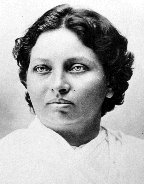 In my travel writers class, we're looking at Pandita Ramabai's book on America, which has been recently translated by Meera Kosambi as Pandita Ramabai's American Encounter (2003). The original book was written in Marathi in 1889, and published as United Stateschi Lokasthiti ani Pravasavritta, which translates to The Peoples of the United States. It's an intriguing book -- part of the small group of "Easterner goes West" books published in the 19th century, which coexist uneasily alongside dozens of conventional Orientalist travel narratives describing the mystic, masalafied "East." What Ramabai has to say about America is interesting partly for the oblique criticisms of colonialism and racism one finds at various points, and partly because of her staunch, unapologetic feminism.
 Meera Kosambi has a thorough introduction to the book and to Pandita Ramabai, which is the source of most of the information in the post below. First off, the basic biography: Pandita Ramabai was born to a Brahmin family in Maharashtra in 1859. In a personal memoir she writes that her father (known as Dongre) went out on a limb and taught her Sanskrit, and also taught her to read and recite from the Puranas -- considered completely off-limits to women at the time. But both of her parents died in 1876 in the terrible Madras famine of 1876-1878, and Ramabai and her brother wandered around India until they ended up in Calcutta in 1878. They impressed Sanskrit experts at Calcutta University, who granted Ramabai the name "Pandita," in honor of her learning. Unfortunately, her brother died soon afterwards, and Ramabai married one of his friends, a lawyer from the Shudra caste named Bipin Behari (also known as Das Medhavi). The couple was ostracized for the cross-caste marriage, and tragically, Medhavi died of cholera just a couple of years later (in 1880), leaving Ramabai to raise their daughter Manorama on her own.
It isn't surprising that she fell in with Christian missionaries, who helped Ramabai go to England in 1883 to study medicine. Unfortunately, she was refused admission after reaching England on account of defective hearing. It was at this point that she converted to Christianity (Anglicanism), which made her controversial in the Indian press at that time. It still may be controversial for some readers, though I think it's important to remember that Ramabai, as a Brahmin woman, had been battling religious orthodoxy her whole life: first, as a woman who knew Sanskrit and could read and critique the classical texts, then as a person who married across caste only to be completely ostracized -- and finally as a young widow who was also orphaned and without siblings!
According to Kosambi, it isn't clear that Ramabai was comfortable within the Anglican fold (Ramabai would dabble with other denominations), nor is it clear that she enjoyed being in England, where she lived between 1883 and 1886. In fact, she didn't publish very much about her specific experiences there, though we do have access to her letters.
In 1886, Pandita Ramabai went to the U.S., to give a lecture at a Women's Medical College in Philadelphia. Here she had a personal connection to another Marathi woman, Anandibai Joshee, who holds the distinction being the first Indian woman to earn a medical degree in the west -- only a few years after medical schools began to open their doors to women. (This was also well before women got the right to vote.) She planned to go for a month, but ended up staying for three years.
In 1887, Ramabai published a book in English, The High-Caste Hindu Woman, dedicated to Anandibai Joshi (who died of TB in 1887), and with a preface by Rachel Bodley, Dean of the Women's Medical College of Pennsylvania, where Anandibai Joshi had studied. The book critiques customs like child marriage, seclusion (purdah), and the treatment of child widows, arguing that education and economic independence are essential for women's liberation. The text is primarily directed at western feminists and educated Indian readers, and Ramabai used sales of the book to raise money for the American Ramabai Association.
Otherwise, did very well in the U.S. Pandita Ramabai. She did numerous lectures at various cities around the northeast and midwest, as well as further out west (she made it as far as Denver, and writes about her impressions of the Rocky Mountains). Her larger mission at this time was to raise money for a school she wanted to start back in India -- and here she was remarkably successful. It's no surprise to find, then, that Ramabai writes effusively about the country in her book, though she does criticize the country's problems with race, its persecution of Native Americans, and the resistance to women's emancipation.
* * *
On to the book itself. Ramabai starts with a reference to the history of early exploration, and a dig at religious superstition:
Centuries ago, when people lacked adequate knowledge of the earth, they indulged in all sorts of speculations in this regard. The ancestors of the Hindu and other communities believed the earth to be flat; as a result, they imagined the universe to be multi-storied, like the large multi-storied city houses, with the earth occupying the middle story. According to the Hindu Puranas, the universe is a fourteen-storied mansion, of which six stories or "worlds" are situated above the earth, and seven below; the lowest of these stories has been named the Nethermost Woeld. Now that all these ideas have been disproved by new discoveries, everyone has understood that the universe is not like a fourteen-storied mansion, and that the earth is not flat. (62)
So much for the scientific value of the Puranas!
Ramabai also doesn't fail to remind her readers that Columbus, in his exploration, was in fact looking for India, and she is unrelenting of her criticism of the exploitative nature of the Spanish and Portuguese doings in the new world in the early years. She accuses Columbus of practicing "deceit," and denigrates his eagerness to enslave the natives, take them back to Europe, and forcibly convert them to Christianity (Catholicism): "How sad that a great man's conduct should be tarnished by such an extraordinarily demonic deed!"
Some of her remarks about this chapter of American history strike me as coded or indirect criticisms of British colonialism:
If these same Europeans had discarded their firearms and weapons, such as bows and arrows, quartz knives, and bone-tipped lances, they would have proven themselves to be truly brave. But sad to say, those who called themselves pious and went forth to enlighten the ignorant, to rescue people from hell and lead them to heaven, ended up by utterly annihilating the poor innocent Indians through deceit, trickery, cruelty, and false speech. (71)
Clearly the British colonization of India and the American conquest of the Native Americans are two quite separate things, but there might well be some parallels in the references to "deceit, trickery, cruelty, and false speech" -- though that is only an inference. (Pandita Ramabai is rarely directly critical of the British in her writings.)
* * *
Occasionally, Pandita Ramabai also makes some circumspect comments on the problem of writing a travel narrative, and seems to be alluding to the extremely problematic narratives Europeans themselves had produced when traveling to India. She knows better than to simply reverse the dynamic, claim to be the monarch of all she surveys:
It is impossible for a person to see all the sides of an object while sketching it; the same applies to the description of the social conditions in a country. A single person is not able to see all aspects of a society; therefore one person's opinion of it cannot be assumed to be infallible.
Some English and American people have traveled in India and written descriptions of our customs and manners and social conditions. A perusal of these clearly shows that a foreigner sees the people of the country he visits in a very different light from how the inhabitants see themselves. Therefore, I have refrained from presenting any firm and final conclusion that such-and-such is the nature of American society and that it has only these many types. Instead, I intend to describe how they appeared to me. This is the objective of this chapter and of the book as a whole.
Fascinating and precocious; it took the discipline of Anthropology another 80 years to reach this level of epistemological humility.
* * *
And finally, I should mention that most of the second half of Pandita Ramabai's book on America is dedicated to the specific question of the status of women in the country. On the one hand, she is impressed by the remarkable progress that was being made with regards to women's education; this was the era during which the great women's colleges were opening, and it was also the era of the first women graduates from law and medical schools. On the other hand, Ramabai is surprised by the amount of resistance these progressive measures encounter, and feels pressed to actively rebut the charge that having women in positions of responsibility, or actively participating in the work-place, would somehow be detrimental to morals. In that the book is aimed at Indian readers, it's hard not to think that she's thinking of the Indian objections to these reforms as well.
Her most striking comment along these lines still in some sense rings true today:
How true is the claim of many Western scholars that a civilization should be judged by the conditions of its women! Women are inherently physically weaker than men, and possess innate powers of endurance; men therefore find it very easy to wrest their natural rights and reduce them to a state that suits the men. But, from a moral point of view, physical might is not real strength, nor is it a sign of nobility of character to deprive the weak of their rights. . . . [A]s men gain wisdom and progress further, they begin to disregard women's lack of strength to honor their good qualities, and elevate them to a high state. Their low opinion of women and of other such matters undergoes a change and gives way to respect. Thus, one can accurately assess a country's progress from the condition of its women. (169)
This statement is perhaps not without a couple of problematic elements, but as a progressive take on the relationship between feminism and history it is still very much something to contend with.
Subscribe to:
Posts (Atom)